

The president of Arts Garage weighs in on the legislative forces reshaping Florida’s nonprofit world
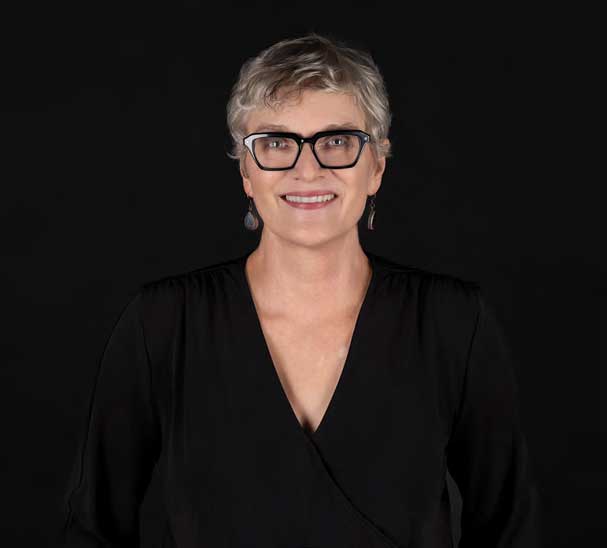
BY MARJORIE WALDO, PRESIDENT & CEO, ARTS GARAGE | PHOTOS BY STUDIO B2 AND DEBRA SOMERVILLE
This year, Arts Garage celebrates fifteen years of bringing people together through the power of art, and I couldn’t be prouder of what we have built — or more determined to protect it.
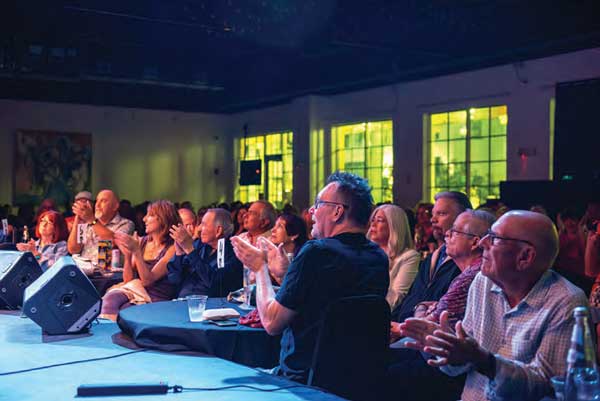
We are presenting extraordinary jazz, theater, visual art, and educational programming that brings people together and strengthens our community. We wrapped another successful season of PLACES!, our summer theater camp, where young people spend weeks discovering their creativity, building confidence, and finding their voices. Since January, we have hosted more than 200 concerts, performances, exhibitions, arts education classes and community events, with a full calendar still ahead of us. Our audiences continue to come from nearly 150 cities across 18 states, demonstrating the growing reach and impact of what we do here in Delray Beach.
Most importantly, we continue to show up every day for this community — creating opportunities for artists, inspiring the next generation, and providing a welcoming space where people from all backgrounds can connect through the arts.
I tell you this not to boast, but because what I am about to say matters more when you understand what is at stake. The threats to the work we do are real, and I would be failing in my responsibility to this community if I did not name them plainly.
We are navigating one of the most challenging policy landscapes the nonprofit arts world has faced in a generation. Three separate legislative developments are converging right now, each consequential on its own, and together forming a pattern that every person who cares about this community should understand. I want to walk through them clearly and honestly.
THE STATE GRANT: A FUNDING FLOOR THAT DISAPPEARED
Most people outside the nonprofit world do not realize that many cultural organizations in Florida have, for years, benefited from a competitive state grant program managed by the Florida Department of State’s Division of Arts and Culture. Applications are reviewed by subject matter experts and evaluated based on merit, community impact, and financial accountability.
That changed in 2024, when the Legislature approved the arts and culture grant budget, and the Governor exercised his line-item veto authority, zeroing out every dollar. Organizations that had planned annual budgets around that funding were left scrambling.
The 2026–27 state budget, signed by the Governor on June 29, offered a partial and complicated picture. The General Program Support line — which funds grants for arts and cultural organizations — survived, meaning the Secretary of State’s recommended list of recipients will be funded. That is welcome news. But the Culture Builds Florida program, which supports smaller and emerging organizations, was vetoed entirely.
Even where funding did survive, the process raises concerns. The organizations ultimately funded did not fully reflect the recommendations made by the expert review panels. As one state senator observed, the final recipients appeared cherry-picked — a mix of the experts’ recommendations and individual legislator requests, with no transparent rationale for the difference. That is not how a merit-based system is supposed to work.
For smaller and mid-size organizations — the ones embedded in communities like Delray Beach, doing the real daily work of arts access and education — the math is getting harder. And the funding we do receive comes with no guarantee it will be there next year, because arts dollars in Florida are categorized as “non-recurring revenue.” There is no baseline. There is no floor.
Notably, the grant program’s eligibility requirements have also become more restrictive in ways that affect working arts organizations directly. To qualify, an organization must certify that all of its programming — from the date of application through the grant period’s end, often spanning eighteen months — is “all ages friendly.” That requirement applies to an organization’s entire programming, regardless of whether a particular performance or exhibition is funded with state dollars. For a multidisciplinary venue presenting the full range of artistic expression, that requirement alone can make participation impossible. It is one reason Arts Garage no longer applies for this funding.
ANTI-DEI LEGISLATION: WHEN VALUES BECOME LIABILITIES
Earlier this year, Florida enacted what is now Chapter 2026-43 of the Florida Statutes — anti-DEI legislation that has implications far beyond college campuses and corporate boardrooms.
For arts organizations, the practical effects are still being interpreted, but the cultural signal is unmistakable: programs, language, and frameworks centered on diversity, equity, and inclusion are increasingly being treated as suspect rather than as strengths.
This matters for Arts Garage in particular, because our mission has always been rooted in the belief that art is most powerful when it reflects the full breadth of human experience. Our programming celebrates diverse artistic voices — including jazz and Latin music, spoken word, and visual art from communities that have historically been underrepresented in cultural institutions. That is not a political position. It is an artistic one. And it is what our audiences come to us for.
The concern, shared widely across the nonprofit sector, is that funding decisions, whether from state sources or from private donors influenced by a shifting climate, may begin to favor organizations that soften or abandon these commitments. And the organizations most at risk are often those doing the most vital work.
PROPERTY TAX REFORM: A TAX SHIFT, NOT JUST A TAX CUT
The issue that concerns me most — and the one most directly in your hands as a voter — is the proposed property tax reform on the upcoming ballot, Amendment 3, known as HJR 1F. I want to be clear about what this measure would do at the local level, because the statewide conversation often stays abstract.
If approved, the homestead exemption expands from the current $50,000 to $150,000 beginning January 1, 2027, and then to $250,000 the following year. For Delray Beach, city officials project a revenue loss of $7 to $12 million annually — a gap that will need to be absorbed or shifted somewhere else. Property taxes currently fund more than half of Delray’s general fund — the same dollars that pay for police, fire-rescue, parks, and libraries.
I understand the appeal. When someone tells you a “vote for tax reform” could save you money, that sounds like a straightforward benefit. And for some households, it genuinely would be. But what this measure really represents is a tax shift, not a tax cut. The revenue has to come from somewhere. Cities can raise other fees — fire protection assessments, stormwater fees, library card fees, parking fees — but those increases rarely offset the full loss, and they fall on everyone, including the homeowners the amendment was meant to help. Under that pressure, the focus also shifts to infrastructure — roads, public safety, essential services. Those priorities are legitimate. But in that calculus, the arts get lost. Cultural organizations are not in the amendment’s list of protected “core services,” and when budgets are under pressure, institutions without political urgency are the first to lose their seat at the table.
The risk is not hypothetical. Statewide, analysts project the measure will cost cities and counties $4.6 billion in its first year and $8.4 billion in the second. Some smaller municipalities, officials have warned, could face dissolution entirely.
At Arts Garage alone, we generate an estimated $3.8 million in local economic impact annually. We serve more than 31,000 patrons each year. We provide free access to transformative arts experiences for children and seniors who would otherwise go without. Milton Segarra, President and CEO of Discover The Palm Beaches, recently shared on our podcast that for every dollar invested in destination marketing — marketing that relies heavily on arts and culture as a core asset — Palm Beach County generates $139 in direct spending and $182 in economic impact. Those numbers demonstrate that investing in arts and culture delivers measurable economic returns.
If the property tax reform passes as written, organizations like Arts Garage will face a reckoning. Cuts to programs. Cuts to staff. Reduced access for the communities we serve. And we are not alone — the same calculus applies to nonprofits across the spectrum, from after-school programs to health services to environmental organizations.
THE PATTERN — AND THE PATH FORWARD
Look at these three developments together and a pattern emerges.
State grant funding is volatile and increasingly politicized, shifting away from merit-based expert review toward legislator-directed priorities. The anti-DEI legislation creates a chilling effect on the values-driven work that defines the best of our cultural institutions. And the property tax reform, if passed, could remove the local funding base that has allowed mid-size nonprofits to operate with independence and integrity.
None of these forces operates in isolation. Together, they create a landscape in which only the largest, best-resourced institutions — the ones that can survive without public support, or that have the political relationships to navigate a shifting environment — will be able to weather what’s coming. Smaller organizations, community-based organizations, organizations serving diverse populations in cities like ours, will face existential pressure.
This is not a call for despair, and it is not a partisan argument. I believe deeply in the democratic process. I believe in the people of this community. And I believe that when voters, donors, and civic leaders understand what is at stake, they make thoughtful decisions.
The Florida Cultural Alliance has observed that legislators often vote on measures without fully understanding their impact on the cultural institutions their own constituents love. Our job — as arts leaders, as community members, as people who believe that a vibrant cultural life is part of what makes a city great — is to close that gap. To connect the dots between policy and impact. To tell our stories clearly and honestly.
I was invited to speak at the 2026 Florida Governor’s Conference on Tourism, the state’s premier annual gathering of tourism industry leaders, held this Sep-tember at the Palm Beach Convention Center. I accepted, because I believe that showing up at the table — making the case directly to decision-makers that arts and culture are not line items to cut but an engine of the tourism economy — is part of the work.
The arts are not separate from Florida’s economic identity. They are woven into it. The visitors who come to South Florida, who fill our restaurants and hotels, who tell their friends and come back — many of them come for the culture. For the music, the galleries, the performances, the energy of a place that feels alive. That story deserves to be heard in every room where Florida’s future is being decided.
If you are a voter in this community, I encourage you to research this measure carefully before you cast your ballot. Look at what your city stands to lose in annual revenue. Think about what that means for the services and institutions you rely on.
If you are a donor or a business leader, I want you to know that the arts organizations in your community are not asking for charity. We are asking for partnership, because the work we do generates returns that extend far beyond our doors.
And if you are a neighbor, a parent, a regular face at a concert or gallery opening — please keep coming. Keep bringing your kids. Keep talking to us. Your presence is not just a source of revenue. It is a source of purpose, and it is what sustains us through every season of challenge.
Arts Garage has been here for fifteen years. We intend to be here for many more.
Marjorie Waldo is President & CEO of Arts Garage in Delray Beach, where she has led the organization’s growth into a nationally recognized cultural institution. Arts Garage presents more than 300 programs annually, serves more than 31,000 patrons, and generates an estimated $3.8 million in local economic impact. Learn more at artsgarage.org.